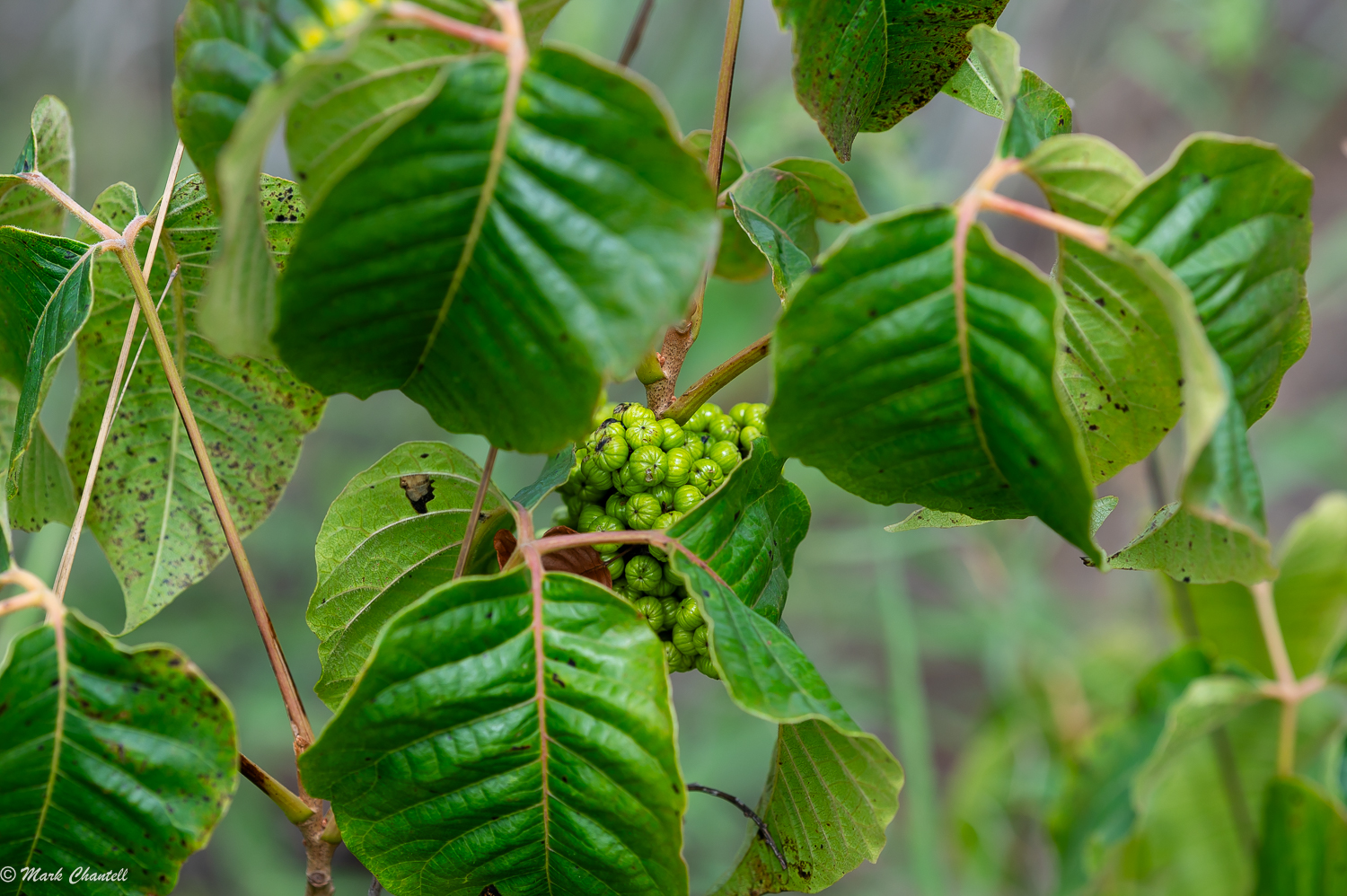
Poison Ivy, the trails at the Indiana Dunes National Park are packed with the stuff. I have hiked those trails almost 300 times in the last 5 years, and the type of photography I do involves getting down close to the ground. I am quite surprised that I have never picked up a rash from it, until a week ago while camping at the Dunes. A couple days later I had an itchy line of blisters developing along the edge of my right hand. I must have just barely brushed up against a leaf because the rash was very mild and somehow I did not spread it anywhere else on my body.
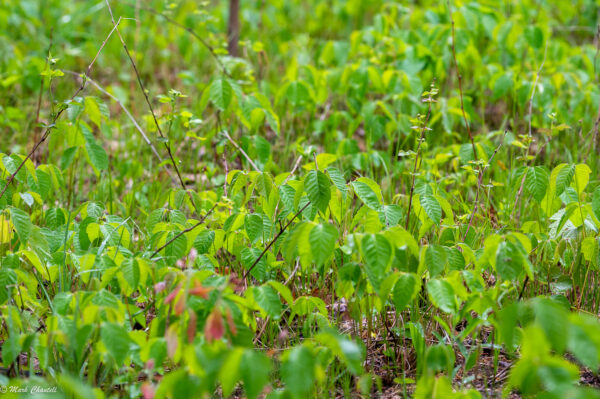
When I say the park is packed with Poison Ivy I mean it. This photograph shows a patch of the stuff alongside the Long Lake trail. Pretty much everything you see here is Poison Ivy. This is not atypical of the area.
Funny thing about Poison Ivy, I never really noticed it until I asked a ranger to point it out to me. Once they did so and explained the different forms it comes in, I started seeing it everywhere along every trail in the park. Some more than others, but pretty much everywhere.
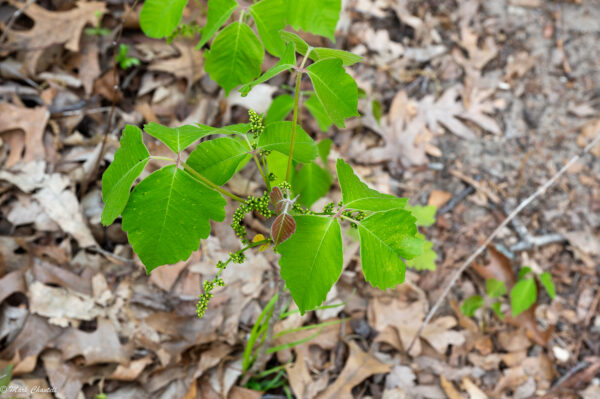
This is the most common form I encounter, a simple plant which is low to the ground. It can also be more like a small bush or shrub.
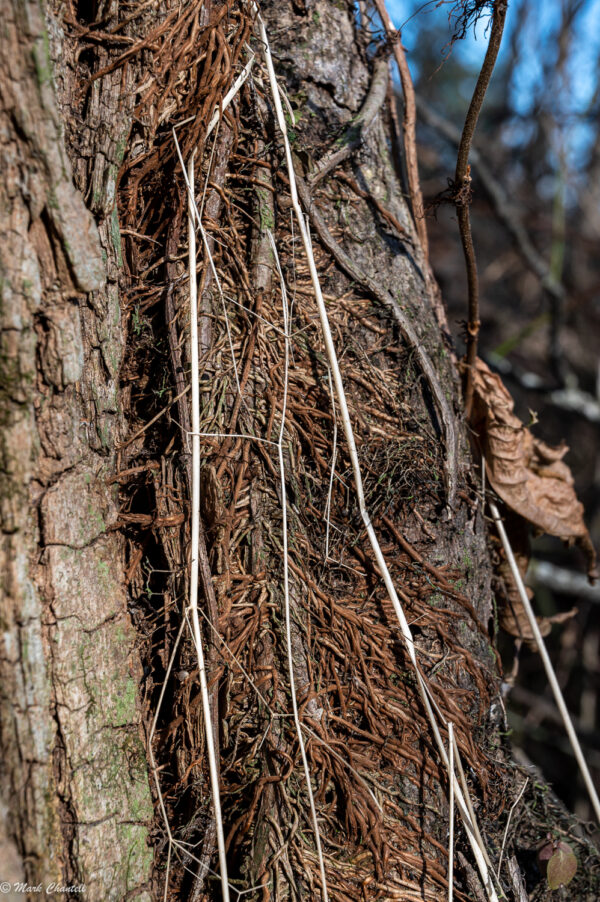
Poison Ivy can also be a vine, climbing and wrapping around trees. In the winter you can see the details of the vine structure of the plant.
An interesting and fun fact about Poison Ivy. All parts of the plant contain the urushiol oil which causes the rash on contact. Not just the leaves but the stem, roots and berries. Furthermore the urushiol oil is present year round. So even in winter it is not advisable to handle any part of the plant.
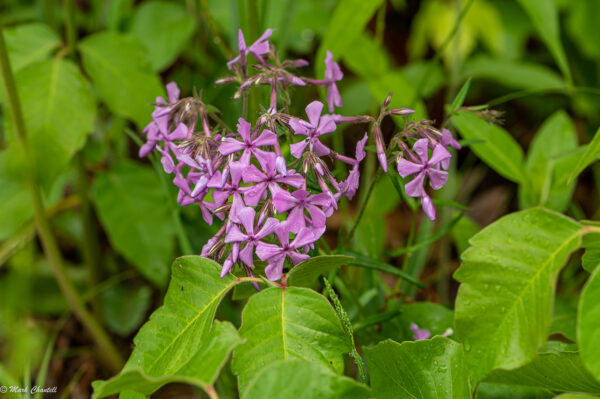
Many other plants grow in the same conditions as Poison Ivy. I often notice scenes like this one. Definitely limits how close I can get to the Phlox, and I wont be brushing aside any wayward leaves that are in my way.
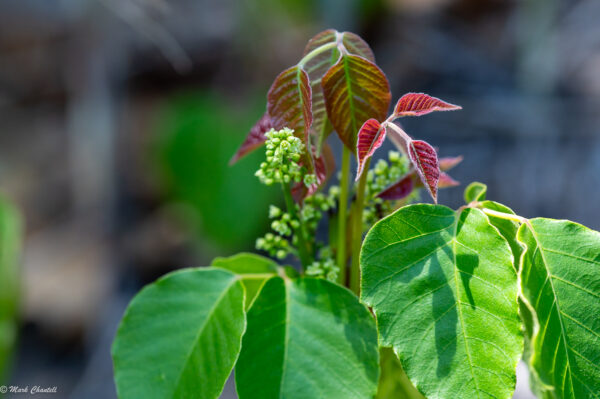
Thing is, Poison Ivy is actually a very attractive plant. It is not showy like a lot of wild flowers, but colors and patterns in the leaves are quite nice.
As you can see in the photograph above, Poison Ivy has berries. Some animals feed on them, and the berries are present through the winter, so they are a useful source of food after most other plants have disappeared.
Something interesting I have noticed is that Poison Ivy is all over the place near the trails. However I have done quite a bit of off trail work for the park, and I have noticed that once you get a little bit away from the trails you don’t see the plant hardly at all.
All in all I have come to appreciate and like the plant, much the same as any other plant in nature. Like everything else in nature it simply needs to be treated with respect.